First order
10% off your first order
Use code FIRSTORDER at checkout. One per customer, and it works on sale items too.

The right garden arch should provide comfortable passage after installation and after your climbing plants mature. Start with the width your path needs, check headroom and side clearance, then confirm how the arch will be secured.
The overall height and width on a product page help you shortlist options. The more useful measurement is the space that remains available for walking, moving equipment and maintaining plants.
A garden arch’s external dimensions, internal opening and planted clearance describe different things.
| Measurement | What it means | Why it matters |
|---|---|---|
| External dimensions | The overall height and width of the frame | Determines whether the arch fits beside beds, fences and walls |
| Internal clearance | The usable opening inside the frame | Determines whether people and equipment can pass through |
| Clearance after planting | The opening remaining once stems, foliage, flowers and ties occupy space | Determines long-term access and maintenance needs |
If a product page lists only overall dimensions, ask for the internal width and installed clear height. The height at the centre of a curved arch does not describe the clearance across the whole opening.
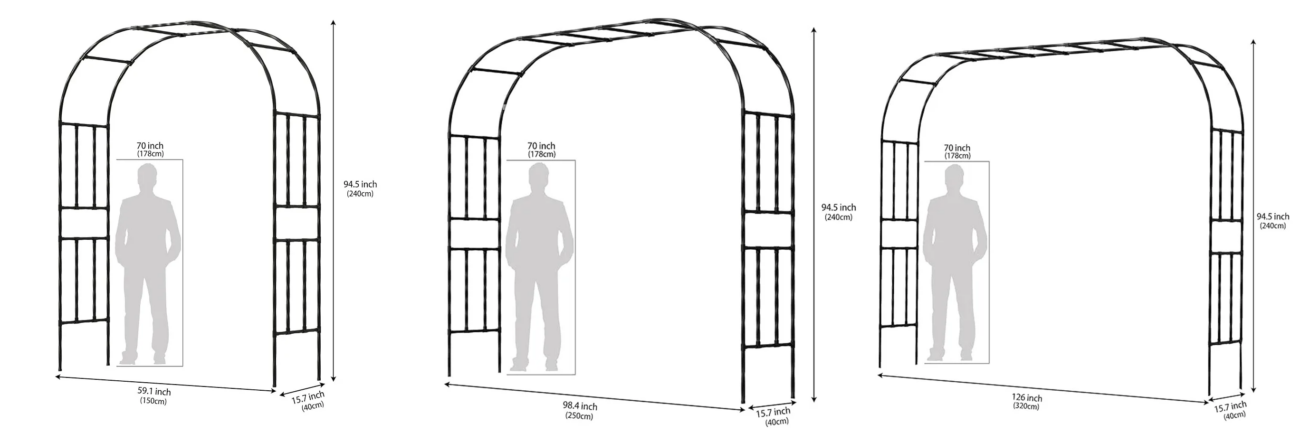
Measure the path where the arch will stand. Check for bed edging, low walls, fences and steps, then mark the proposed post positions.
The frame and its fixings should leave the passage you need. Placing the posts in planting areas on either side may help preserve the existing path width, provided the ground, nearby roots and underground services allow installation.
A path used for walking has different requirements from one used to move a wheelbarrow or carry large containers.
Test the route with the items that regularly pass through it:
Allow for the person using the equipment, including hand positions and the space needed to approach or turn beyond the arch.
Climbing plants do not always remain close to the frame. Side shoots, leaves and flowers can extend into the passage. Thorny rose stems need particular attention around shoulder and arm height.
Consider the plant’s mature size alongside the maintenance you are prepared to do. On a frequently used path, an opening that depends on constant hard pruning can become an ongoing inconvenience.
Start with the tallest regular user of the path. They should be able to pass comfortably while standing upright. Also consider carrying tall plants, moving tools and raising an arm while passing through.
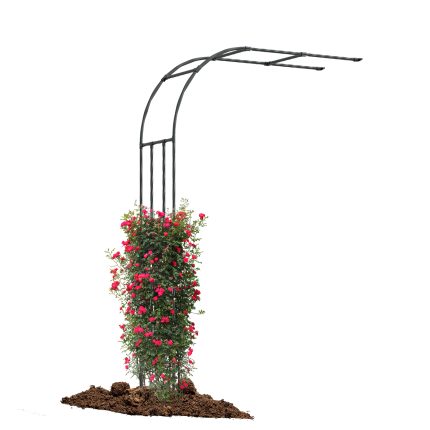
The relevant measurement is clear height above the finished walking surface. A curved arch is generally higher in the centre and lower toward the sides, so check the space where people will actually walk.
An empty frame can appear spacious while offering less headroom once planted. Downward-growing shoots and hanging flowers can occupy the opening.
Wisteria deserves particular attention to variety. The Royal Horticultural Society notes that some Japanese wisterias have long, hanging flower clusters suited to display on arches and pergolas. Consider the arch during flowering as well as when the plant is bare or newly planted. RHS wisteria growing guide
Assess the space beneath the mature planting, rather than judging height from the empty frame alone.
An arch can provide enough headroom without being suitable for your chosen climber.
For wisteria, grapes and other plants that develop substantial mature growth, check:
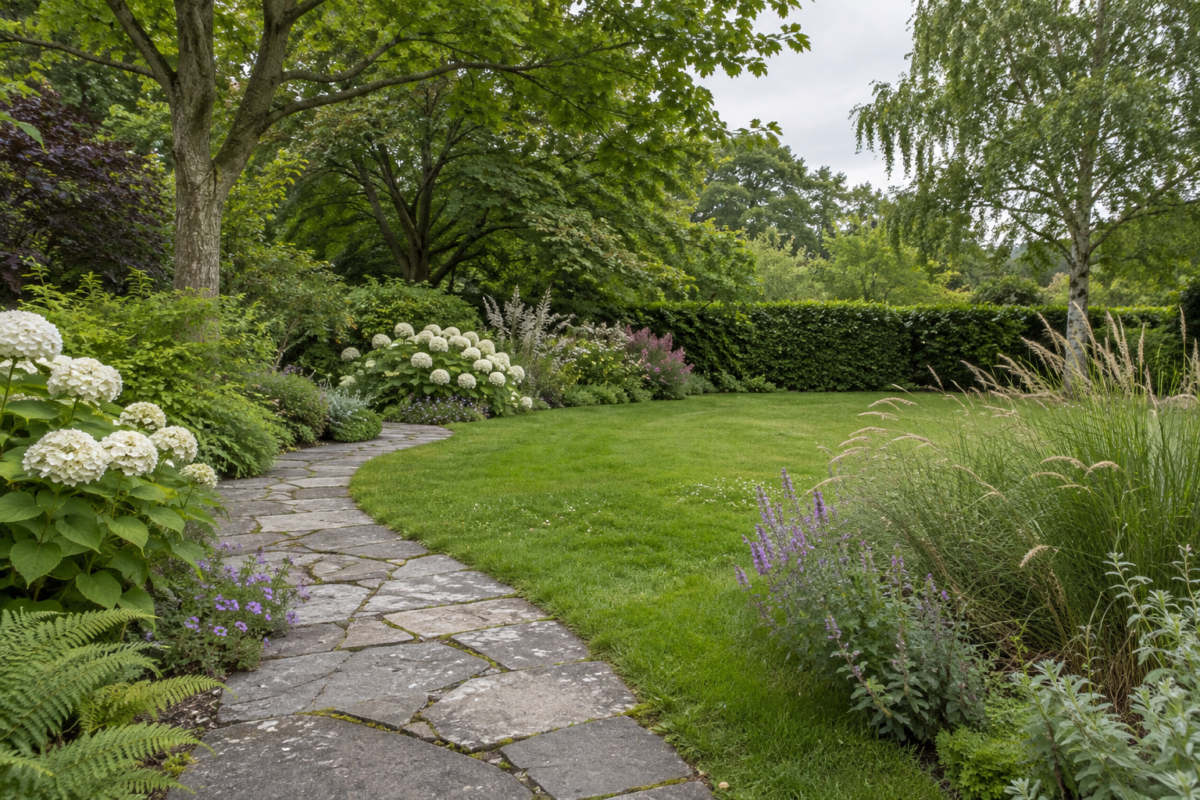
If an arch is installed by inserting its legs into soil, and the listed height includes those legs, the above-ground height will be lower.
For example, the original product information states that the Square Tube Garden Arch Trellis has legs designed to enter the soil by approximately 11.8 inches. Before ordering, confirm whether its listed 98.4-inch height already accounts for that installation depth.
Avoid calculating installed clearance until the measurement definition is clear. Do not reduce the required insertion depth simply to gain headroom.
For soil installation, confirm the specified anchoring method, insertion requirements and suitable ground conditions.
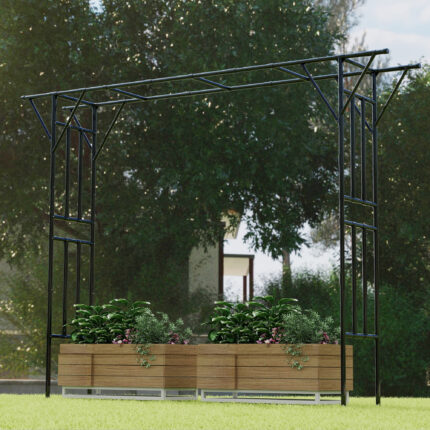
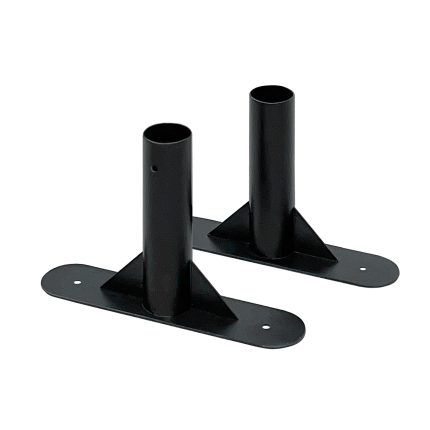
For a patio, paved path or deck, establish whether the model supports hard-surface installation and which bases, brackets or other fixings are required. Decorative planters or improvised weights should only be treated as an installation solution where the manufacturer specifies their suitability.
Check both post locations and the finished walking surface if the path slopes or includes uneven paving. Ground levels can affect usable headroom and the installation arrangement.
| Arch | Height | Widths | Best for |
|---|---|---|---|
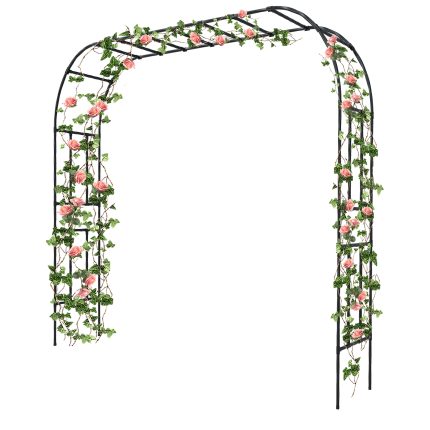
| Metal Garden Arch Trellis | 94.5 in (7.9 ft) | 59.1 / 98.4 / 126 in | Roses, clematis, honeysuckle over a path or gate |
| Square Tube Garden Arch Trellis | 98.4 in (8.2 ft) | 59.1 / 98.4 / 126 in | Heavier vines: wisteria, grapes, climbing roses |
Compare the frame and support requirements alongside the dimensions, especially for heavier climbers.
Mark the proposed post positions on the ground and use a tape measure or temporary markers to visualise the height. View the location from both ends of the path, nearby windows and your main seating area.
Check whether the arch frames the view you want to highlight. Then test practical access by moving your usual gardening equipment through the marked opening and simulating the task of carrying a large pot.
Before ordering, confirm:
A well-chosen garden arch brings the path, planting and surrounding space together while remaining useful as the garden develops.
No. Preserving access matters in a small garden, especially on its main path. Choose an opening that suits the route, then manage the visual scale through the frame design and plants with an appropriate mature size.
Check the gate’s full swing, handle, hinges and gatepost positions. Consider whether mature stems could interfere with the latch or opening movement. A frame that fits around a closed gate may still obstruct it during use.
No. Check thresholds, surface evenness, projecting fixings and turning space on both sides. Test with the actual equipment where possible. For a formal accessible route, also check the applicable local requirements.
They may be suitable companions, but compare the specific varieties’ mature size, vigour and pruning needs. Confirm that the structure is suitable for their combined growth, and plan stem positions to preserve airflow, maintenance access and passage.
Consider mature vine growth, foliage and fruiting loads, along with access for training, pruning and harvesting. Confirm that the product is suitable for long-term use with edible vines, and plan training so stems and fruit bunches do not crowd the main walking route.
Width alone does not establish stability. Frame design, connections, anchoring, ground conditions and plant coverage all matter. Ask the manufacturer about site suitability and any requirements for managing the structure during severe weather.
First assess whether suitable training, tying in and timely pruning can restore the passage. If frequent heavy pruning is required just to keep the route usable, reconsider the plant choice, arch position or opening size. Avoid removing structural components to create more space.
Popular categories

