First order
10% off your first order
Use code FIRSTORDER at checkout. One per customer, and it works on sale items too.
A 4-foot firewood rack is a useful starting point for smaller batches and frequent refills. A 6-foot rack gives you a longer storage row without requiring a full 8-foot space. An 8-foot rack suits a larger batch when you have enough level ground and loading access. The right choice depends on how much wood arrives at once, its log length, and the usable space inside the rack.
Start with your largest planned delivery, then check the location. Rack length alone does not establish capacity, and an 8-foot rack does not automatically hold a full cord or a winter’s supply.
Quick takeaways
The 4-, 6-, and 8-foot labels describe nominal lengths. They are not the complete dimensions you need to mark on the ground.
The current OnlyGarden Firewood Rack with Cover page lists these dimensions for its three variants:
| Size option | Listed frame length × height × depth | Listed cover length × depth × height |
|---|---|---|
| 4 ft | 48.8 × 48 × 13.4 in | 48.8 × 14.9 × 42.9 in |
| 6 ft | 72.4 × 48 × 13.4 in | 72.4 × 14.9 × 42.9 in |
| 8 ft | 96 × 48 × 13.4 in | 96 × 14.9 × 42.9 in |
Use the frame and cover measurements when testing placement. The listed overall height is not a verified usable stacking height: the feet, lower rails, and frame construction occupy some of that space. Likewise, external length is not necessarily the clear distance between the uprights.
Mark the footprint with removable markers, then stand in front with your log basket. Open the cover, simulate lifting out a log, and check any nearby gate. If the longest option blocks access, a shorter rack with a manageable refill schedule is the better layout.

A 4-foot option is worth considering when you buy small batches, can refill regularly, or need a separate place for ready-to-burn logs while another supply seasons elsewhere.
Before choosing it, measure the batch you normally bring home. If that batch already makes a row longer than the rack’s usable span at a suitable height, the excess will need another supported storage area. Avoid choosing a compact rack and then piling the overflow above its end supports.
A smaller rack also does not make every location suitable. Choose its position around drainage, access, and applicable fire-safety guidance, rather than fitting it into the closest gap beside the house.
A 6-foot option is a practical middle choice if your ordinary batch exceeds a compact rack but the available area cannot comfortably accommodate an 8-foot model.
At the same usable height and log depth, increasing usable row length from 4 to 6 feet increases geometric stacking volume by 50%. That comparison assumes equal usable dimensions in every other direction; it is not a verified capacity statement for specific products.
Test the intermediate footprint rather than dismissing it as almost as large as the 8-foot version. The difference can determine whether a gate opens or a cart can turn.
An 8-foot option is worth checking when you want to keep more wood in one row and have a stable, sufficiently long storage area.
For equal usable height and depth, an 8-foot row has twice the geometric volume of a 4-foot row. It still needs a suitable base along the entire frame. A long strip with one soft or sloping end may need preparation before it can support the larger layout.
An 8-foot rack is not automatically a bulk-seasoning solution. Measure the delivery and confirm the rack’s usable capacity before ordering wood. If the whole batch will not fit, arrange additional storage before it arrives.
For a neatly stacked rectangular row, use:
Stacked volume in cubic feet = row length in feet × wood-stack height in feet × log length in feet.
Convert inches to feet before multiplying. For example, 16-inch logs have a depth of 16 ÷ 12, or approximately 1.33 feet, in a single row.
Utah State University Extension describes a full cord as 128 cubic feet of evenly stacked wood and air space. Divide stacked cubic feet by 128 to express the measured volume as a cord fraction. Do not subtract all the small spaces between properly stacked pieces; those are part of the stacked measure. USU firewood volume guidance.
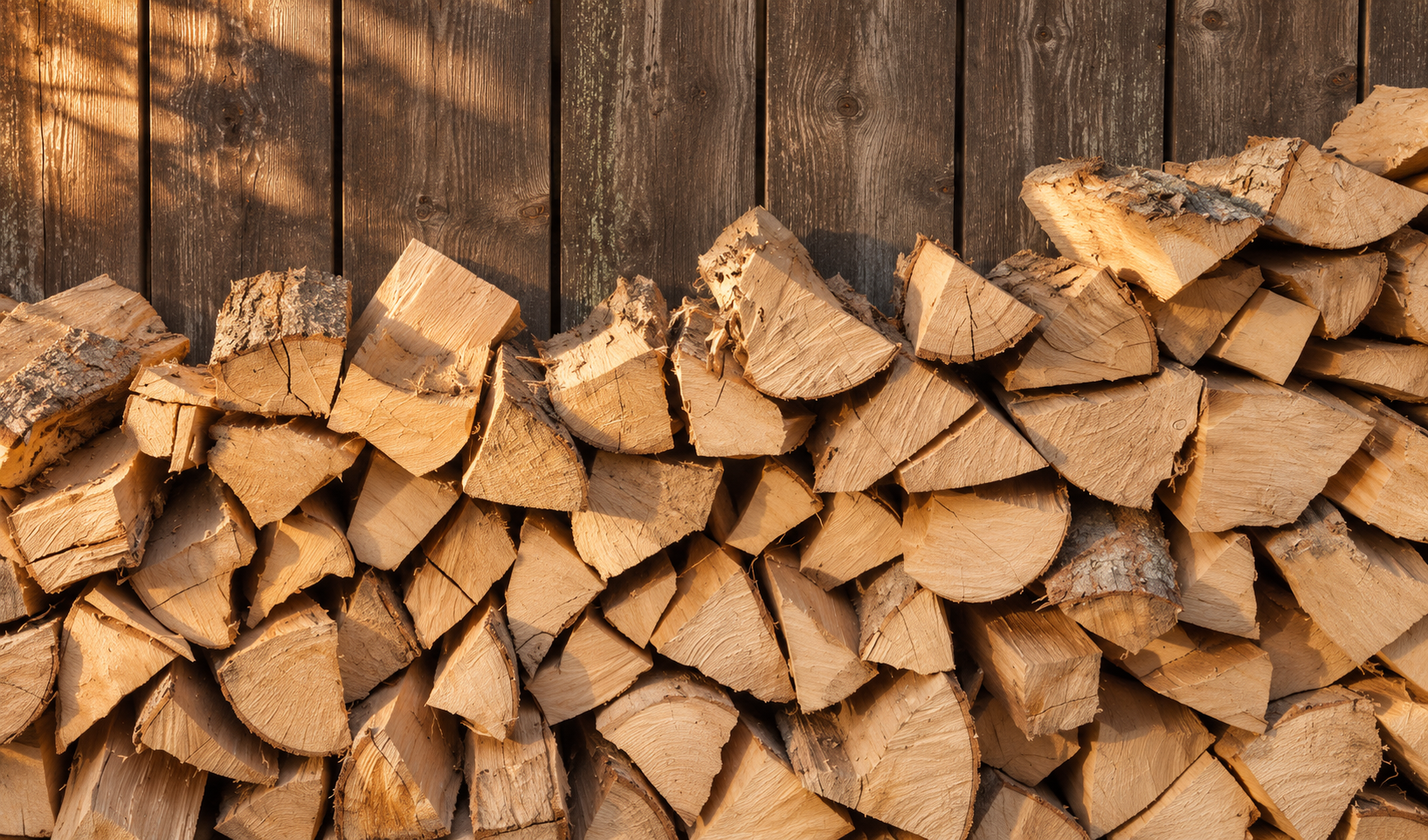
The following examples assume usable row lengths of exactly 4, 6, and 8 feet, a 3-foot wood-stack height, and 16-inch logs. These are illustrative stacks, not advertised capacities for the OnlyGarden racks. Confirm that any rack can safely support the intended logs and height before using the calculation for a purchase.
| Illustrative usable row length | Calculation | Stacked volume | Cord equivalent |
|---|---|---|---|
| 4 ft | 4 × 3 × 16/12 | 16 cu ft | 1/8 cord |
| 6 ft | 6 × 3 × 16/12 | 24 cu ft | 3/16 cord |
| 8 ft | 8 × 3 × 16/12 | 32 cu ft | 1/4 cord |
This shows why height and depth matter. A listing that says only “8-foot rack” leaves important information unanswered. Ask for usable stacking dimensions or a defined volume that applies to your log length.
A face cord is commonly used to describe a 4-foot-high, 8-foot-long row, with depth determined by the logs. At 16 inches deep, that example is about 42.7 cubic feet, or one-third of a full cord. Different log lengths change the volume.
California’s Department of Food and Agriculture warns that terms such as “face cord,” “truckload,” and “rack” do not provide a legally defined quantity on their own. For buying decisions, get the actual stacked dimensions or a clear cord fraction in writing. Do not assume that an unspecified “half face cord” means half of 128 cubic feet. CDFA firewood measurement guidance.
The most useful measurement is often already in your yard. Stack the amount you intend to keep between refills and measure its length, height, and log depth. If you do not yet have wood, ask the supplier how much a delivery represents when stacked.
Then calculate the row length you need:
Required usable row length = target stacked volume ÷ planned wood-stack height ÷ log depth.
Suppose you want to store 20 cubic feet, using 16-inch logs and a planned 3-foot stacking height. The required usable length is:
20 ÷ 3 ÷ (16/12) = 5 feet.
A nominal 4-foot rack would be too short for that particular arrangement. A 6-foot model becomes a candidate, subject to checking its actual inner span, supported log length, permitted load, and usable stacking height. Allow room for uneven pieces rather than treating an exact mathematical fit as comfortable storage.
This example does not tell you how long 20 cubic feet will last. Your appliance, weather, wood species, and burning routine determine consumption. Use your own refill history instead of a universal “logs per fire” estimate.
The 4-, 6-, and 8-foot labels run along the row; they do not describe the length of each log. A longer rack does not fix a mismatch between the wood and its supporting rails.
Measure several pieces from your usual supplier, including the shortest and longest. Check whether short pieces can bridge the supports and whether longer pieces fit beneath the cover without making the stack awkward to balance.
The listed frame depth also should not be treated as the only acceptable log length. Logs may extend beyond the frame where the design permits, but that compatibility needs confirmation. Do not balance unsuitable short pieces across gaps or assume a cover will stretch over every delivery.
Two smaller racks may work better when you need to separate wood by condition or when two prepared areas are easier to access than one long strip.
For example, one rack can hold checked, ready-to-use wood while the other holds a new batch. You can retrieve older wood without lifting freshly delivered pieces out of the way. Conversely, one longer rack may be simpler when a single batch arrives together and you have one suitable continuous footprint.
Compare the complete setup: two covers, both footprints, and access at each location. Two nominal 4-foot racks do not necessarily provide exactly the same usable volume as one 8-foot model, because their end frames occupy different amounts of space.
After choosing the size, use our outdoor firewood storage guide for base preparation, covering, and batch rotation.
Stay within the rack’s stacking and load limits. Do not pile above the end supports to compensate for insufficient length. Choose more suitable storage or smaller deliveries instead of making an unstable mound under the cover.
There is no dependable count without knowing log dimensions and how they stack. A few large splits occupy different space from many small ones. Measure a representative batch by stacked volume rather than buying around an advertised piece count.
No. A weight limit and a volume measure answer different questions. The wood must fit securely within the rack, and its weight must remain within the permitted load. One rating cannot replace the other.
Mark its full outside dimensions with the cover fitted, then test loading and retrieval. Leave the gate, path, and cover openings usable. If those tasks require moving the rack, the location is too tight even if the frame technically fits.
Only if that is the storage role you need it to serve. You may prefer a smaller working supply with separate bulk storage. Use past consumption and delivery size to plan the system; do not assume one rack size corresponds to a fixed number of winter weeks.
Measure the batch, calculate its required row length, and test the complete footprint. Start with 4 feet for smaller quantities, consider 6 feet when compact storage needs frequent replenishment, and assess 8 feet for a larger batch on a suitable site. Confirm usable capacity before buying the wood to fill it.
Compare the three OnlyGarden variants linked above with your measurements, then confirm the selected size’s stacking space and log compatibility before ordering.
Popular categories

